
Charles Leclerc Monaco, Ferrari, and the Weight of Expectation
Few modern Formula One drivers occupy a space as complex as Charles Leclerc.
MOTOR RACING
Vitor Regis
5/28/20265 min read
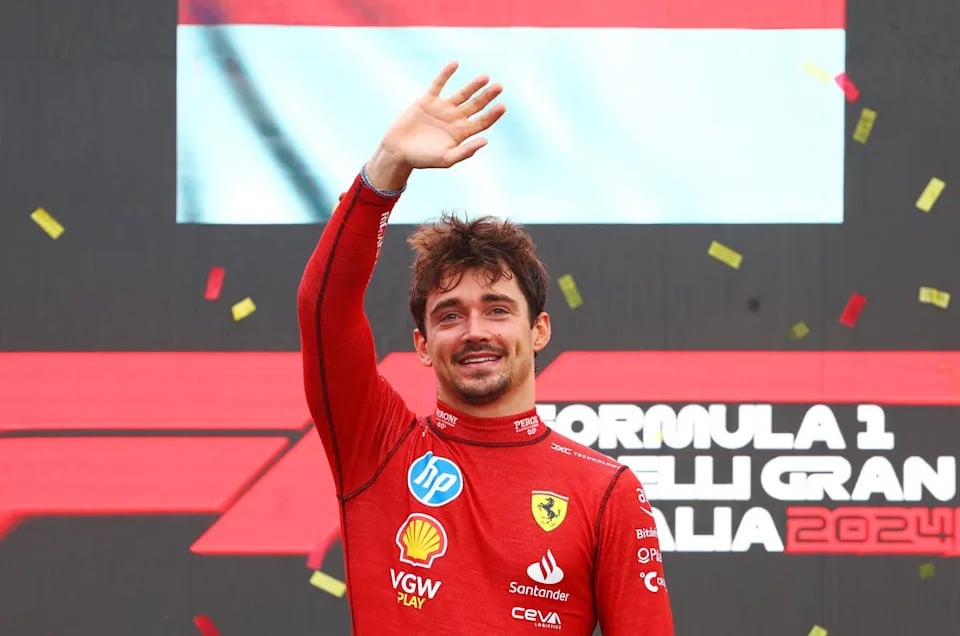
Few modern Formula One drivers occupy a space as complex as Charles Leclerc.
To some, he represents Ferrari’s future — a driver of exceptional speed carrying the ambitions of the sport’s most historic team. To others, he embodies Formula One’s modern contradiction: immense talent navigating a championship where machinery, strategy, and institutional pressure often matter as much as raw ability.
Yet before Ferrari, before pole positions and championship speculation, Charles Leclerc was simply a young driver growing up in Monaco — a place where motorsport is not distant spectacle, but part of the landscape itself.
Born on 16 October 1997 in Monte Carlo, Monaco, Charles Marc Hervé Perceval Leclerc entered a family already connected to racing. His father, Hervé Leclerc, competed in Formula Three, while his godfather, former Formula One driver Jules Bianchi, would later become one of the most significant influences in his development.
This environment did not guarantee success.
Formula One history is filled with talented young drivers whose careers stalled long before reaching the world championship grid. What separated Leclerc was not access alone, but an unusually early combination of technical sensitivity, aggression under braking, and adaptability in wheel-to-wheel competition.
His karting career quickly established that reputation.
Between 2005 and 2013, Leclerc competed across Europe, steadily progressing through increasingly competitive categories. His breakthrough came through victories and championship performances that drew attention from talent scouts and junior academies. Among these achievements were the French PACA Championship, the Karting Academy Trophy and strong international results that positioned him among Europe’s leading young drivers.
Karting, however, represents only the beginning of modern motorsport development.
The transition to single-seater racing often exposes weaknesses hidden during earlier competition. Drivers must adapt to aerodynamics, tire management, engineering feedback and far greater strategic complexity.
Leclerc adapted rapidly.
In 2014 he entered Formula Renault 2.0 competition, where his speed became immediately apparent. Rather than requiring several developmental seasons, he demonstrated front-running pace early, collecting podiums and race victories that reinforced growing expectations surrounding his future.
That momentum continued in the FIA Formula 3 European Championship.
Driving in one of junior racing’s most competitive environments, Leclerc secured multiple victories and finished fourth overall in 2015. While the result itself was impressive, the broader significance lay elsewhere.
His progression was becoming increasingly linear.
Rather than alternating between success and stagnation — a common pattern in junior motorsport — Leclerc advanced with unusual consistency.
By 2016, he entered GP3 Series with ART Grand Prix.
The season proved decisive.
Leclerc won the championship in his rookie year, claiming multiple victories and demonstrating race management beyond his age. More importantly, his performances attracted intensified attention from Ferrari, which had already incorporated him into the Ferrari Driver Academy.
That relationship would soon become central to his career.
If GP3 confirmed Leclerc’s potential, Formula 2 transformed perception into certainty.
The 2017 FIA Formula 2 Championship remains one of the most commanding rookie campaigns of the modern junior era. Driving once again for ART Grand Prix, Leclerc secured seven victories and eight pole positions on his way to the title.
The statistics alone are impressive.
The context is even more remarkable.
During that same season, Leclerc experienced profound personal loss with the death of his father, Hervé Leclerc. Only weeks later, he returned to competition and continued winning.
Public discussion often romanticizes these moments, yet their significance lies less in mythology than in psychological resilience. Motorsport is intensely demanding even under stable circumstances. Maintaining elite performance while confronting grief represented an extraordinary professional and personal challenge.
The season carried additional emotional weight because of Leclerc’s connection to Jules Bianchi.
Bianchi, who suffered fatal injuries following his accident at Suzuka in 2014, had long been both mentor and family figure. His influence extended beyond emotional support; Bianchi’s career trajectory and relationship with Ferrari helped shape Leclerc’s own ambitions.
By late 2017, Formula One promotion was no longer hypothetical.
The remaining question concerned timing.
Ferrari elected not to place Leclerc immediately in its senior team. Instead, he joined Sauber for the 2018 season — a decision that reflected both caution and strategic planning.
Historically, Ferrari has rarely accelerated driver promotions without preparation. Even highly regarded prospects often require experience outside Maranello before confronting the pressures attached to the Scuderia.
The Sauber year therefore served two purposes.
Officially, it was a rookie season.
Unofficially, it functioned as an extended Ferrari evaluation.
Leclerc delivered convincingly.
After difficult opening races, he adapted quickly to Formula One machinery and began scoring points regularly, often outperforming expectations associated with the Sauber package. His overtaking, qualifying pace and technical feedback impressed observers throughout the paddock.
The promotion that followed solved one question while creating another.
For 2019, Ferrari announced Leclerc alongside four-time world champion Sebastian Vettel.
The decision was significant.
Ferrari is not merely a racing team. It operates as an institution shaped by history, national symbolism and extraordinary public scrutiny. Drivers do not simply represent Ferrari — they inherit responsibility for maintaining one of sport’s most emotionally charged legacies.
Leclerc entered this environment at twenty-one years old.
What followed altered perceptions of his ceiling.
Throughout 2019, Leclerc emerged not as a developmental teammate but as an immediate competitive force. His qualifying performances became particularly notable, extracting exceptional pace from Ferrari’s SF90.
Victories soon followed.
At Spa-Francorchamps, Leclerc secured his first Formula One victory during an emotionally difficult weekend marked by the death of Formula 2 driver Anthoine Hubert. One week later, he achieved something arguably even more significant for Ferrari supporters.
He won at Monza.
The Italian Grand Prix carries singular importance within Ferrari culture. Victories there resonate differently, shaped by generations of tifosi and decades of collective memory. Leclerc’s triumph ended Ferrari’s prolonged Monza drought and accelerated his transformation from promising talent to symbolic figure within the Scuderia.
Yet Formula One rarely permits uninterrupted ascent.
Ferrari’s decline in competitiveness during 2020 introduced a different phase of Leclerc’s career.
Without championship-capable machinery, his role shifted. Rather than fighting consistently for victories, he became responsible for extracting results beyond theoretical expectations. Errors occurred, but so did performances widely regarded as evidence of elite ability, including podium finishes achieved under difficult technical circumstances.
Those seasons revealed an important characteristic.
Leclerc remained publicly committed to Ferrari.
In modern Formula One, where career calculations often dominate decision-making, such loyalty carries strategic and emotional significance.
The arrival of Ferrari’s 2022 challenger briefly renewed championship aspirations.
Leclerc opened the season strongly, winning in Bahrain and establishing early momentum against reigning champion Max Verstappen. Yet reliability failures, operational mistakes and fluctuating competitiveness gradually undermined the campaign.
What emerged was not failure, but a familiar Formula One reality.
Talent alone rarely determines championships.
Still, no event shaped Leclerc’s narrative more personally than Monaco.
For years, his home Grand Prix appeared defined by frustration. Crashes, strategic setbacks and mechanical problems repeatedly prevented meaningful success on the streets where his career began.
Then, in 2024, the pattern changed.
Leclerc claimed pole position and converted it into victory, becoming the first Monégasque driver to win the Monaco Grand Prix during the Formula One World Championship era.
The achievement resonated beyond statistics.
Monaco had long represented unfinished business — a convergence of family history, public expectation and personal memory. Victory there did not resolve every question surrounding his career, nor did it guarantee future championships.
It accomplished something more subtle.
It closed a chapter.
Today, Charles Leclerc occupies a distinctive place within Formula One.
He is neither veteran nor newcomer, neither fully established champion nor unfulfilled prospect. Instead, he exists within a narrower and more demanding category — drivers whose reputations are already significant, yet whose defining achievement may still lie ahead.
Whether Ferrari can deliver the machinery required to convert potential into titles remains uncertain.
What is less disputed is Leclerc’s position within the sport itself.
His story is no longer merely about promise.
It is about expectation, endurance and the unresolved relationship between extraordinary talent and Formula One’s most demanding institution.
Highlighted Sources
• Official Charles Leclerc Website
https://charlesleclerc.com/en/
• Official Formula 1 Driver Profile
https://www.formula1.com/en/drivers/charles-leclerc
• Ferrari Formula 1 Archive and Team History
https://www.ferrari.com/en-EN/formula1
• FIA / Formula 2 Historical Records
https://www.fiaformula2.com/
• Biography and Career Statistics Reference
https://en.wikipedia.org/wiki/Charles_Leclerc
Subscribe to our newsletter
Enjoy exclusive special deals available only to our subscribers.





Copyright © Vitor regis
são paulo, brazil
cnpj:66.825.015/0001-05