
Machado de Assis: The Quiet Architect of the Human Soul
There are writers who conquer through spectacle and others who transform literature through subtlety. Machado de Assis belonged to the second kind.
LITERATURE
Vitor Regis
5/23/20263 min read
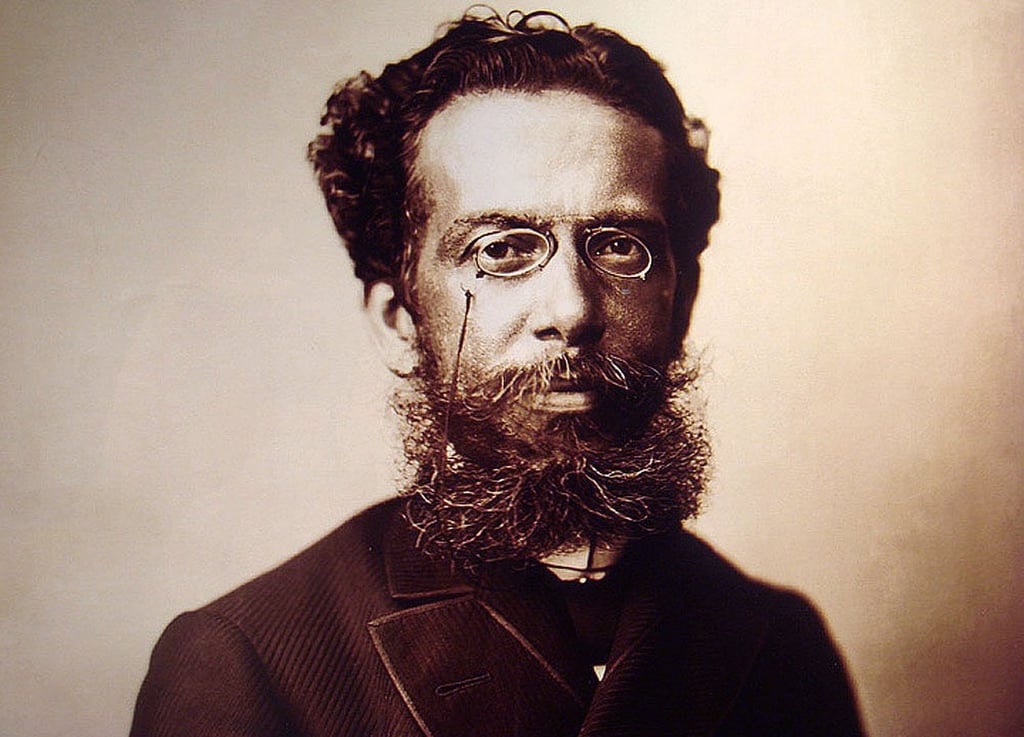
There are writers who conquer through spectacle and others who transform literature through subtlety. Machado de Assis belonged to the second kind. Without armies of followers, without dramatic manifestos, and far from the literary capitals of Europe, he reshaped Brazilian literature and produced some of the most psychologically sophisticated fiction ever written. His world was not built on grand battles or heroic adventures, but on the hidden theater of the human mind.
Born in Rio de Janeiro in 1839, Joaquim Maria Machado de Assis entered life with few advantages. He was the son of a house painter and a washerwoman, raised in modest circumstances in a society still marked by slavery and rigid social hierarchy. Frail in health and affected by epilepsy, Machado seemed an unlikely candidate for literary immortality. Yet his story would become one of extraordinary intellectual ascent.
His formal education was limited. Unlike many celebrated writers of his era, Machado did not attend prestigious universities or travel widely through Europe. Instead, he educated himself through relentless curiosity. Working first as a printer’s apprentice and later as a journalist and civil servant, he immersed himself in books, languages, and ideas. Literature became both refuge and instrument.
The Brazil into which Machado was born was undergoing transformation. The nineteenth century was a period of political instability, imperial authority, and profound inequality. Slavery remained a central institution until its abolition in 1888. Beneath the elegance of Rio de Janeiro’s salons and aristocratic circles lay a society wrestling with moral contradictions. Machado observed these contradictions closely.
His early writings reflected the Romantic style popular at the time, marked by sentiment and conventional storytelling. But over the years, his voice changed. It grew sharper, more ironic, and more psychologically daring. Rather than merely describing society, Machado began dissecting it.
The turning point came with The Posthumous Memoirs of Brás Cubas, published in 1881. The novel opens with a startling premise: the narrator is dead. From beyond the grave, Brás Cubas recounts his life with wit, vanity, and astonishing honesty. This unusual perspective allowed Machado to do something revolutionary. Death liberated the narrator from social politeness, exposing human ambition, selfishness, and illusion without restraint.
The effect was unlike anything Brazilian readers had encountered.
Machado’s genius lay not only in innovation but in perception. He understood that people rarely act for the reasons they claim. Beneath declarations of virtue often hide pride, jealousy, insecurity, or self-interest. His fiction invites readers into that uncomfortable territory where motives blur and self-knowledge becomes uncertain.
This psychological depth reached new heights in Dom Casmurro, perhaps his most famous novel. The story revolves around Bento Santiago and his suspicion that his wife, Capitu, betrayed him with his closest friend. Yet Machado refuses to provide certainty. Was Capitu unfaithful, or was Bento consumed by paranoia and possessiveness? The novel offers clues but no verdict.
That ambiguity is precisely the point.
Long before modern psychology became fashionable, Machado understood the unreliability of memory and narration. People do not merely remember events; they reconstruct them, shaping reality according to fear, desire, and wounded pride. In Machado’s universe, truth is rarely stable.
Despite his penetrating critique of society, Machado was not a political pamphleteer. His irony was quieter and therefore more enduring. He revealed injustice not through speeches but through observation. Social vanity, racial prejudice, and moral hypocrisy emerge naturally within his stories, often hidden behind elegant conversation and civilized manners.
His personal life contrasted with the turbulence of his fiction. Machado shared a long and devoted marriage with Carolina Augusta Xavier de Novais, whose companionship remained central to his life. Friends described him as reserved, courteous, and intellectually refined. Yet beneath this composed exterior worked a mind fascinated by contradiction.
By the time of his death in 1908, Machado de Assis had become a respected literary figure and the founding president of the Brazilian Academy of Letters. But his true legacy would unfold more fully in the century that followed.
Today, Machado stands not simply as a Brazilian writer but as a global literary force. Critics often place him alongside figures such as Dostoevsky, Kafka, and Henry James for his psychological insight and narrative innovation. His novels continue to feel remarkably modern because the emotions they examine—envy, vanity, insecurity, love, and self-deception—remain unchanged.
Machado de Assis never relied on spectacle. He preferred whispers to declarations, irony to certainty, and complexity to comfort. In doing so, he built literature that does not merely tell stories. It studies the fragile architecture of the human soul. And more than a century later, readers still find themselves inside his mirror, unsettled by how much they recognize.
Subscribe to our newsletter
Enjoy exclusive special deals available only to our subscribers.
Service
The Company
Terms and conditions
Refund Policy






Copyright © Vitor Regis
São Paulo, Brazil
CNPJ: 66.825.015/0001-05