
NOVAK DJOKOVIC — THE ART OF ENDURANCE
Few athletes in modern sport have inspired as much admiration, debate, and fascination as Novak Djokovic.
TENNIS
Vitor Regis
5/31/20264 min read
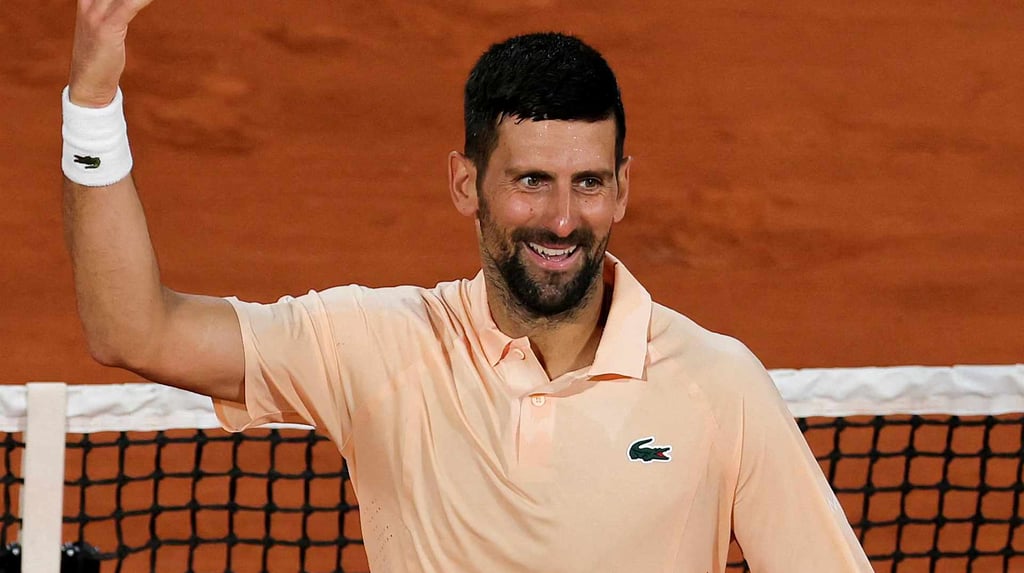
Few athletes in modern sport have inspired as much admiration, debate, and fascination as Novak Djokovic. To some, he is tennis’s greatest strategist. To others, he is the ultimate competitor—an athlete defined not merely by talent, but by survival, discipline, and an almost unnatural refusal to surrender.
His story begins far from the polished stadiums and luxury courts of professional tennis.
Born on May 22, 1987, in Belgrade, Djokovic grew up during one of the most turbulent periods in Serbian history. While many future sports stars are raised within stable systems and elite academies, Djokovic’s childhood unfolded amid economic hardship and political instability. Air raid sirens and uncertainty were part of everyday life.
Yet tennis became his escape.
At the age of four, he picked up a racket and immediately showed unusual coordination and focus. Local coaches noticed something different about the young boy—not simply technical skill, but intensity. He trained obsessively, often practicing under conditions far removed from the glamorous image associated with professional tennis.
Djokovic’s early years shaped more than his game. They forged resilience.
As a teenager, he moved through Europe’s competitive junior circuit, facing stronger opponents and cultural barriers. He turned professional in 2003. At first, he was viewed as talented but unlikely to threaten the established order of men’s tennis.
That order belonged to two giants.
Roger Federer represented elegance and technical perfection. Rafael Nadal embodied relentless physical intensity. Together, they appeared almost untouchable.
Then came Djokovic.
His breakthrough arrived in 2008 when he captured his first Grand Slam title at the Australian Open. Suddenly, tennis had a new force. But even after that victory, many questioned whether he could consistently challenge Federer and Nadal over the long term.
The answer came dramatically in 2011.
That season transformed Djokovic from contender into phenomenon.
He began the year with an extraordinary winning streak, defeating Federer and Nadal repeatedly on the sport’s biggest stages. His movement seemed almost impossible. Balls that appeared unreachable somehow returned with interest. His flexibility, balance, and anticipation redefined defensive tennis.
But Djokovic was never merely a defender.
He combined elastic athleticism with tactical intelligence and psychological warfare. Opponents discovered that winning points against him required extraordinary effort—and winning matches required something close to perfection.
In 2011, he won three Grand Slam titles and claimed the world number one ranking for the first time. Many historians consider it one of the finest seasons ever played in tennis.
From there, Djokovic built a career that increasingly challenged the assumptions of tennis history.
For decades, greatness had been measured through Grand Slam trophies and longevity. Djokovic pursued both with remarkable precision.
He won on every surface—hard court, clay, and grass—demonstrating rare adaptability. His dominance at the Australian Open became legendary, where he accumulated a record number of titles and turned Melbourne into one of the strongest fortresses in modern sport.
Yet his path was never smooth.
Unlike Federer, who often enjoyed universal affection, or Nadal, admired for visible humility and passion, Djokovic occupied a more complicated position in public perception.
He was sometimes celebrated and sometimes criticized.
Crowds frequently favored his rivals. His emotional reactions and confrontational moments occasionally generated controversy. But Djokovic rarely hid from this tension. Instead, he seemed to absorb it.
Pressure, criticism, and hostility became fuel.
This psychological dimension separates Djokovic from many champions. He has often spoken about mental training, breathing techniques, and emotional control. Tennis, in his philosophy, is not simply physical competition. It is a battle of concentration and inner stability.
That mindset proved essential during one of the most difficult chapters of his career.
In 2017, persistent elbow problems interrupted his momentum and forced surgery. For the first time in years, uncertainty surrounded his future. Critics questioned whether his dominance had ended.
Then came another reinvention.
Djokovic returned in 2018 and quickly reclaimed his place at the summit. The comeback reinforced a defining pattern throughout his career: whenever doubt emerged, he answered with reinvention.
By the early 2020s, he had entered statistical territory previously thought unreachable.
Weeks at world number one.
Masters titles.
Grand Slam finals.
Historic consistency.
Most significantly, Djokovic surpassed the men’s record for Grand Slam singles championships, reaching 24 major titles and establishing himself as the only man to complete a triple Career Grand Slam—winning each major tournament at least three times.
Records alone, however, cannot fully explain Djokovic’s significance.
His career unfolded during perhaps the strongest competitive era tennis has ever seen. Rather than dominating weaker opposition, he rose while competing directly against Federer and Nadal—two players already considered all-time greats.
The rivalry among the “Big Three” transformed tennis into a global drama.
Federer offered artistry.
Nadal delivered ferocity.
Djokovic represented endurance.
And endurance may be his greatest legacy.
His matches often resemble psychological marathons. Long rallies, improbable recoveries, and momentum shifts define his style. When opponents tire mentally, Djokovic often appears strongest.
This endurance extends beyond the court.
Away from competition, Djokovic has invested significant energy into philanthropy. In 2007, he and his wife, Jelena Djokovic, established the Novak Djokovic Foundation. The foundation focuses on early childhood education and improving opportunities for children, particularly in Serbia.
For Djokovic, success carries responsibility.
He has frequently described education and childhood development as causes deeply connected to his own experiences and upbringing. The foundation has supported schools, teachers, and families, reflecting a dimension of his identity often overshadowed by athletic headlines.
Today, Djokovic stands as more than a champion.
He is a symbol of persistence.
His story challenges traditional ideas about talent. Greatness, in his case, was not simply inherited. It was constructed—through discipline, reinvention, and refusal to accept limitation.
Whether history remembers him as the greatest tennis player ever may remain debated.
What is far harder to debate is this:
Novak Djokovic changed tennis forever.
He proved that elegance is not the only path to greatness.
That popularity is not a prerequisite for excellence.
And that endurance—quiet, relentless, and uncompromising—can become an art form of its own.
Highlighted Sources
Official & Reference Sources:
• Novak Djokovic Official Website
• ATP Tour – Novak Djokovic Profile
• Encyclopaedia Britannica – Novak Djokovic Biography
• Novak Djokovic Foundation
• Novak Djokovic Foundation – About Us
• Biography.com – Novak Djokovic Biography
Subscribe to our newsletter
Enjoy exclusive special deals available only to our subscribers.








Copyright © Vitor regis
são paulo, brazil
cnpj:66.825.015/0001-05