
Prague, Czech Republic: Where History, Culture and Modernity Converge
Prague, the capital of the Czech Republic, is one of Europe’s most captivating cities and a rare example of a destination where history, architecture, culture, and modernity coexist in remarkable harmony.
GEOGRAPHY
Vitor Regis
5/22/20262 min read
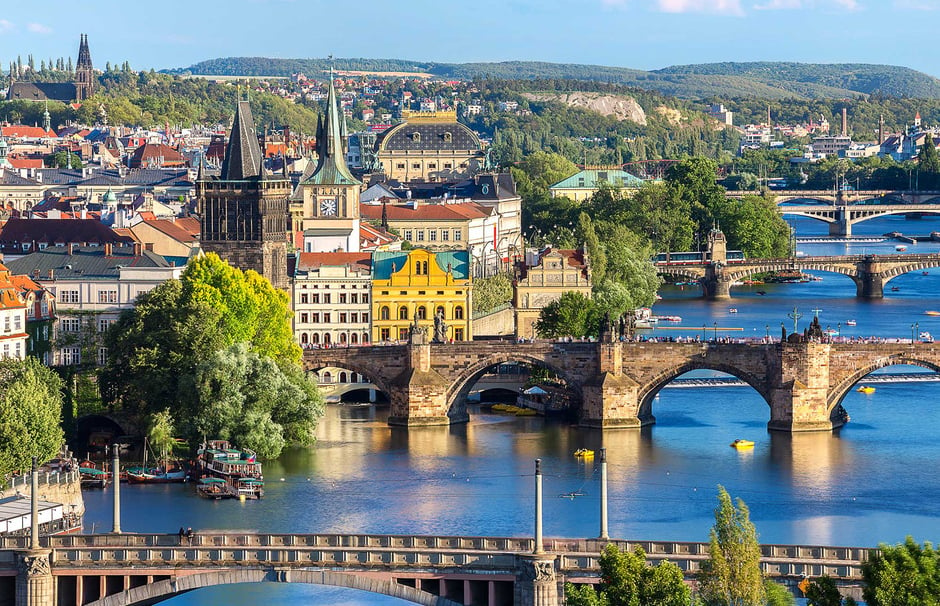
Prague, the capital of the Czech Republic, is one of Europe’s most captivating cities and a rare example of a destination where history, architecture, culture, and modernity coexist in remarkable harmony. Located in the heart of Central Europe and divided by the Vltava River, the city is home to approximately 1.3 million residents and is often referred to as the “City of a Hundred Spires” due to the striking skyline formed by churches, towers, and historic buildings. Its Historic Centre, designated as a UNESCO World Heritage Site in 1992, preserves centuries of architectural and cultural development, making Prague a true open-air museum. The city’s origins date back to the 9th century with the establishment of Prague Castle, and its history spans some of Europe’s most defining periods, including its medieval rise under Charles IV, when Prague became one of the most influential cities of the Holy Roman Empire, as well as the Hussite Wars, the Austro-Hungarian era, Nazi occupation, communist rule, the Prague Spring of 1968, and the Velvet Revolution of 1989, which marked the peaceful transition toward democracy. Prague’s urban landscape reflects this extensive historical legacy through an extraordinary blend of Gothic, Baroque, Renaissance, Art Nouveau, and Czech Cubist architecture, creating a cityscape unlike any other in Europe. Among its most iconic landmarks are Prague Castle, considered one of the world’s largest ancient castle complexes and now serving as the official seat of the Czech presidency; Charles Bridge, a 14th-century masterpiece lined with Baroque statues connecting the Old Town with Malá Strana; and the famous Astronomical Clock, installed in 1410 and still operating today as a symbol of medieval scientific and artistic ingenuity. Prague’s significance extends beyond architecture into the intellectual and cultural history of Europe. The city inspired writers such as Franz Kafka, whose works transformed Prague into an almost mythical literary setting, alongside figures like Milan Kundera and Jaroslav Seifert, while its musical heritage was shaped by composers and performers including Mozart, Antonín Dvořák, and Bedřich Smetana, preserving a cultural life that remains vibrant through concert halls, theaters, and galleries. Czech identity is also reflected in Prague’s gastronomy, characterized by hearty traditional dishes such as svíčková, goulash, knedlíky, and the popular sweet pastry trdelník, accompanied by a globally celebrated brewing tradition that plays a central role in local social life. Today, Prague stands not only as a major tourist destination but also as the economic and technological center of the Czech Republic, attracting startups, international businesses, and financial investment. Tourism remains one of the city’s strongest economic drivers, with approximately 7.44 million overnight visitors recorded in 2023, nearly 78.8% of whom were international travelers, highlighting Prague’s enduring global appeal. Major attractions such as Prague Castle, the Petřín Funicular, and Prague Zoo demonstrate the diversity of experiences available to visitors. However, the city’s popularity has also introduced challenges related to sustainability, including overcrowding, housing pressure, and overtourism, encouraging local authorities to pursue more balanced and responsible tourism policies. Prague’s urban ecosystem can be understood through the interaction of four interconnected pillars—history, architecture, culture, and economy—where centuries of political, artistic, and social transformation continue to shape a living and evolving identity. Far beyond its picturesque medieval image, Prague is a dynamic and sophisticated city that condenses over a thousand years of European history into a contemporary urban environment, preserving the timeless atmosphere that has made it one of the world’s most admired and studied capitals.
Sources: UNESCO – Historic Centre of Prague; Encyclopaedia Britannica – Prague Overview; Czech Statistical Office; Prague Tourism Data; studies on sustainable tourism and European cultural heritage.
Subscribe to our newsletter
Enjoy exclusive special deals available only to our subscribers.
Service
The Company
Terms and conditions
Refund Policy





Copyright © Vitor Regis
São Paulo, Brazil
CNPJ: 66.825.015/0001-05