
The Battle of Stalingrad: The City That Broke an Empire
The Battle of Stalingrad was more than a military confrontation; it became a collision of ideologies, industrial power, and human endurance that altered the trajectory of the twentieth century.
HISTORY
Vitor Regis
5/22/20264 min read
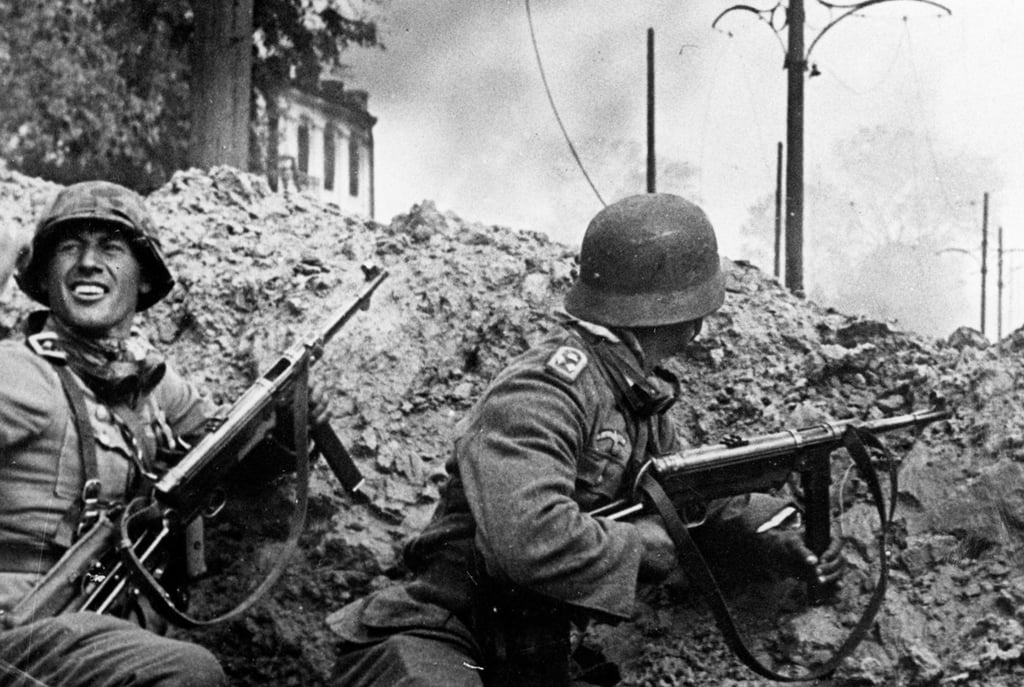
The Battle of Stalingrad was more than a military confrontation; it became a collision of ideologies, industrial power, and human endurance that altered the trajectory of the twentieth century. Fought between July 1942 and February 1943 on the banks of the Volga River, the battle emerged from Nazi Germany’s broader campaign to dominate southern Soviet territory and secure the oil fields of the Caucasus, resources Adolf Hitler considered essential for sustaining the German war machine. Stalingrad itself—today known as Volgograd—was strategically significant not only because it was a major industrial center producing tractors and armaments, but also because controlling the city would sever Soviet transport routes and protect Germany’s southern advance. Yet the city possessed another layer of importance: it carried the name of Soviet leader Joseph Stalin, transforming the campaign into a contest of symbolism as much as strategy. Historians widely regard Stalingrad as one of the greatest and most decisive battles of the Second World War, marking the moment when the momentum of war on the Eastern Front decisively shifted against Germany.
By the summer of 1942, German armies had advanced deep into Soviet territory after the massive invasion launched the previous year under Operation Barbarossa. Hitler ordered the German Sixth Army, commanded by General Friedrich Paulus, toward Stalingrad, believing the city could be captured quickly. Instead, the offensive evolved into one of history’s most brutal urban battles. German aircraft subjected the city to devastating bombardment, reducing entire districts to ruins and killing thousands of civilians. Ironically, the destruction aided Soviet defense: shattered factories, collapsed apartments, and broken industrial complexes created a labyrinth of defensive positions that neutralized much of Germany’s superiority in tanks and maneuver warfare. What followed became known as Rattenkrieg—“rat war”—a form of house-to-house combat in which soldiers fought for staircases, basements, railway stations, and even individual rooms. Snipers, artillery, and close-quarters assaults transformed Stalingrad into a landscape where survival itself became uncertain. Soviet commander Vasily Chuikov adopted a strategy of fighting at extremely close range to deny German forces effective use of air power and heavy artillery, while Soviet reinforcements crossed the Volga under constant bombardment to sustain resistance.
TIMELINE — Key Moments
July 1942: German offensive begins
August 1942: Massive Luftwaffe bombing devastates Stalingrad
Autumn 1942: Street-by-street warfare dominates the city
19 November 1942: Soviet Operation Uranus launches
November 1942: German Sixth Army surrounded
31 January–2 February 1943: Paulus and remaining forces surrender
Despite German gains that at times placed nearly ninety percent of the city under Axis control, Soviet leadership refused to surrender Stalingrad. Behind the visible struggle inside the city, Soviet planners prepared a counterstroke of remarkable scale and deception. On 19 November 1942, the Red Army launched Operation Uranus, attacking not the strongest German units in the city but the weaker Romanian, Hungarian, and Italian formations protecting the flanks. The offensive succeeded with extraordinary speed, encircling approximately 250,000 Axis troops and trapping the German Sixth Army inside Stalingrad. Hitler rejected proposals for retreat and insisted the city be held, trusting Hermann Göring’s unrealistic promise that the Luftwaffe could supply the surrounded forces by air. Winter, starvation, disease, and relentless Soviet attacks shattered that illusion. Temperatures plunged below freezing, food became scarce, and ammunition dwindled. What had begun as a campaign of conquest became a struggle for mere survival. By January 1943, Soviet forces launched the final offensive, compressing German positions into shrinking pockets of resistance. On 31 January, Friedrich Paulus—recently promoted by Hitler to field marshal in the expectation that he would never surrender—capitulated, and the remaining German resistance ended days later. Around 91,000 German soldiers entered captivity; only a fraction would eventually return home.
RESEARCH SNAPSHOT — Human and Military Cost
Axis casualties: ~800,000 estimated
Soviet casualties: ~1.1 million estimated
Civilian deaths: Tens of thousands
Outcome: Destruction of the German Sixth Army and irreversible strategic setback for Nazi Germany
The significance of Stalingrad extended far beyond the ruins of one city. Militarily, it destroyed a major German army and exhausted reserves Germany could not easily replace. Psychologically, it shattered the myth of Wehrmacht invincibility that had dominated Europe since 1939 and inspired resistance across occupied territories. Politically, it strengthened Allied confidence and demonstrated that Nazi expansion could be halted and reversed. Many historians therefore describe Stalingrad not simply as a battle but as the decisive turning point of the European war—a moment when the strategic initiative passed permanently to the Soviet Union and Germany increasingly fought a defensive conflict from which it would never recover. In the frozen ruins beside the Volga, amid collapsed factories and shattered neighborhoods, an empire built on rapid conquest encountered its limits, and the course of World War II changed irreversibly.
Sources
Subscribe to our newsletter
Enjoy exclusive special deals available only to our subscribers.
Service
The Company
Terms and conditions
Refund Policy






Copyright © Vitor Regis
São Paulo, Brazil
CNPJ: 66.825.015/0001-05