
The Impact of Exchange Rates and the U.S. Dollar on the Brazilian Economy
The U.S. dollar occupies a unique position in the Brazilian economy because it functions simultaneously as the world’s primary reserve currency, a financial safe-haven asset, and a benchmark for global commodity and trade prices; consequently, fluctuations in the Brazilian real against the dollar extend far beyond financial markets and directly influence businesses, inflation, investment decisions, and household purchasing power.
ECONOMY
Vitor Regis
5/22/20263 min read
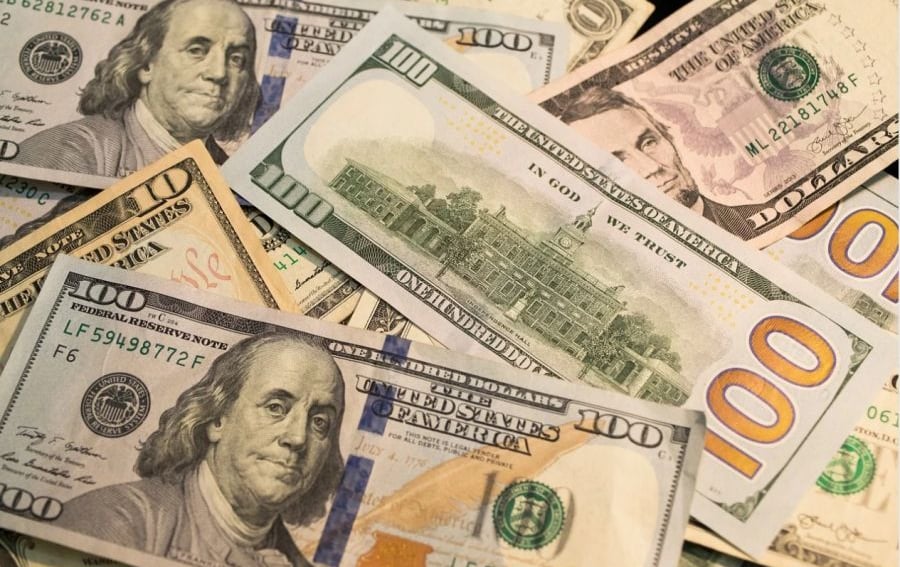
The U.S. dollar occupies a unique position in the Brazilian economy because it functions simultaneously as the world’s primary reserve currency, a financial safe-haven asset, and a benchmark for global commodity and trade prices; consequently, fluctuations in the Brazilian real against the dollar extend far beyond financial markets and directly influence businesses, inflation, investment decisions, and household purchasing power. Since 1999, Brazil has operated under a floating exchange-rate regime, meaning the value of the real is largely determined by supply and demand in foreign-exchange markets, although the central bank may intervene to reduce excessive volatility or preserve market stability. The mission of the Brazilian central bank is closely tied to price stability and financial-system soundness, making exchange-rate movements an important variable within monetary policy.
In practice, a stronger dollar often fuels inflation in Brazil because many sectors depend directly or indirectly on imported goods or internationally priced commodities. Fuel, fertilizers, electronics, industrial machinery, pharmaceuticals, and technological components become more expensive when the real depreciates. Even goods perceived as purely domestic are frequently affected: food production depends on imported fertilizers and energy, manufacturing relies on foreign inputs, and transportation costs react to global oil prices. This dynamic explains why exchange-rate movements frequently appear alongside inflation trends and monetary-policy debates. Research by the International Monetary Fund indicates that Brazil experiences what economists call exchange rate pass-through — the transmission of currency depreciation into domestic prices — yet this effect is neither immediate nor complete. Compared with previous decades and many Latin American economies, Brazil’s pass-through has declined and today resembles patterns observed in advanced economies, although price adjustments can still occur relatively quickly in certain sectors.
However, a stronger dollar is not universally harmful. For export-oriented sectors, currency depreciation may generate significant gains. Agriculture, mining, and parts of Brazilian manufacturing often benefit when commodities sold internationally in dollars produce larger revenues once converted into reais. This partially explains why periods of currency weakness may coincide with strong export performance and improved trade balances. Yet these advantages are not unlimited. Exporters also face higher operating costs when fertilizers, fuel, imported equipment, or foreign technology become more expensive, reducing part of the competitive benefit created by a weaker currency.
RESEARCH SNAPSHOT — Winners and Losers of a Strong Dollar
Exporters: often benefit from improved international competitiveness
Importers: face higher acquisition and operational costs
Consumers: encounter inflation in imported goods and energy-related products
International tourism: overseas travel becomes more expensive
Foreign investors: assess exchange rates alongside interest rates, inflation, and political or fiscal risk
Another essential dimension is the relationship between interest rates and exchange rates. In emerging economies such as Brazil, currency fluctuations often reflect investor confidence, fiscal expectations, and monetary-policy credibility. Higher domestic interest rates tend to attract foreign capital seeking returns, strengthening the real, while fiscal uncertainty or global shocks may trigger capital outflows and dollar appreciation. IMF studies examining Brazil show that monetary-policy surprises and changes in inflation expectations frequently influence exchange-rate behavior, illustrating the close interaction between central-bank decisions and currency markets. The Brazilian central bank continuously monitors exchange rates, inflation, and financial conditions as part of its broader responsibility to preserve currency purchasing power and economic stability. Ultimately, the dollar is not merely a financial quotation displayed on trading screens; it acts as a transmission channel through which global crises, geopolitical tensions, commodity cycles, and investor sentiment reach domestic prices, production costs, investment flows, and the daily lives of millions of Brazilians. Understanding exchange rates, therefore, means understanding one of the most influential mechanisms shaping Brazil’s modern economic landscape.
Sources
Subscribe to our newsletter
Enjoy exclusive special deals available only to our subscribers.
Service
The Company
Terms and conditions
Refund Policy






Copyright © Vitor Regis
São Paulo, Brazil
CNPJ: 66.825.015/0001-05